
Companies with strong learning cultures experience 30–50% higher employee retention than those without. That’s not a soft stat — it’s a survival one, especially in high-turnover, high-pressure environments like call centers.
But here’s the problem: Most training programs don’t actually measure whether learning sticks. They roll out onboarding decks, deliver content, issue completion badges — and then hope for the best. Meanwhile, ramp times stretch, CSAT dips, and agents quit before they ever feel confident on the floor.
It’s not just a training issue. It’s a measurement issue.
A call center training platform that doesn’t track effectiveness is more than a missed opportunity — it’s a silent cost center. Every time you skip measurement, you're flying blind while operational inefficiencies quietly pile up.
This article unpacks six hidden costs — five common, one dangerously overlooked — that teams face when they skip the measurement step. If you’re ready to lead with data, shorten ramp time, and create a high-retention, high-performance floor… this is where it starts.
1. Longer Ramp Times = Delayed ROI
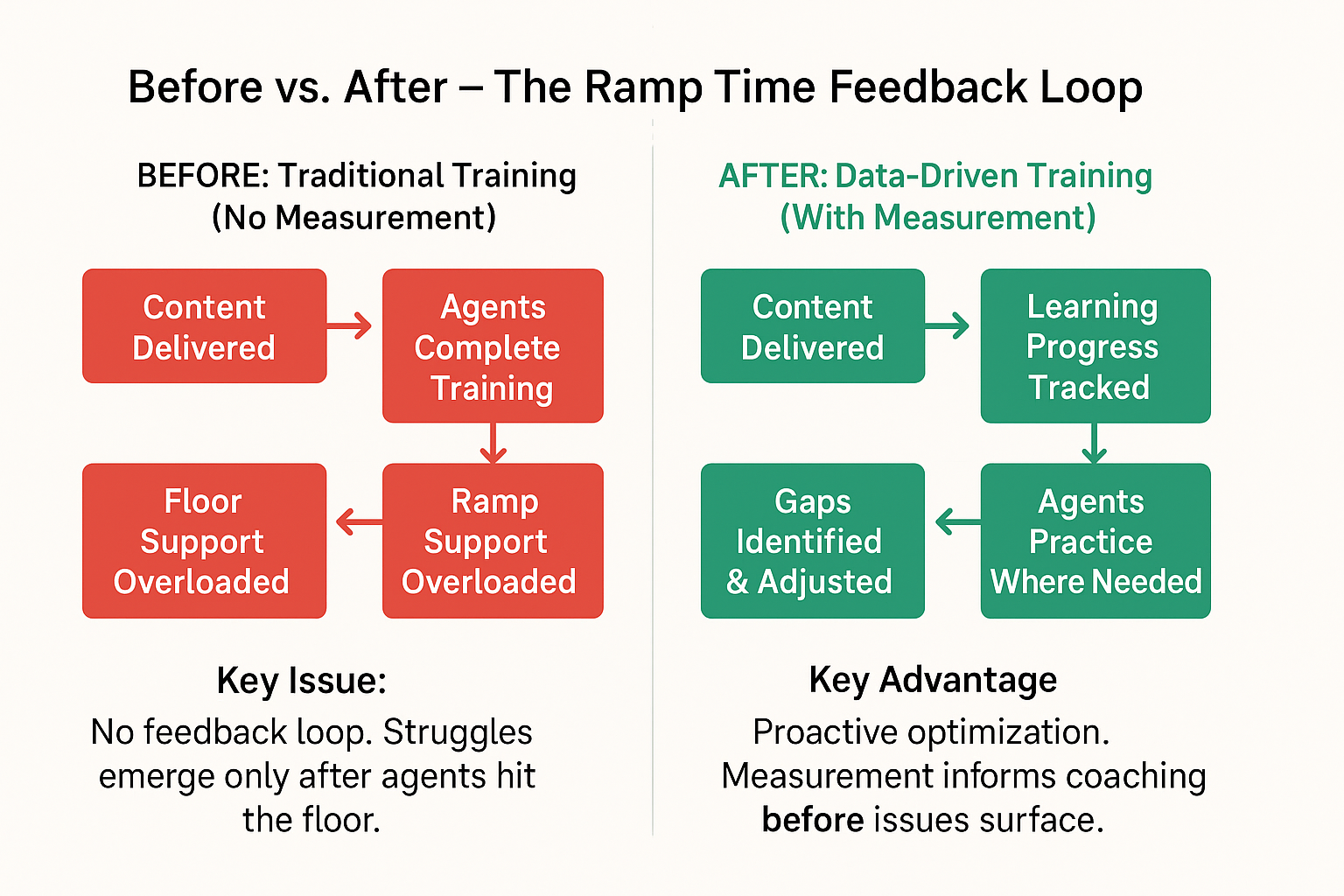
Ramp time isn’t just a staffing issue — it’s a cost center. Every additional week it takes for a new agent to reach full productivity represents lost revenue, lower service quality, and added strain on the team. Yet many training leaders struggle to shorten this window, not because their content is bad — but because they’re not measuring what works.
When you can’t see where learners get stuck, you can’t fix it. You end up over-training on some things, under-training on others, and assuming completion equals competence.
A robust call center training platform should track not only attendance and quiz scores, but real-world readiness: which agents can handle key call types, which scenarios still trip them up, and how quickly they’re improving over time.
The Data Behind It
Research by Aberdeen found that organizations using performance-linked training data cut ramp time by 17% compared to those that don’t measure at all [source]. Multiply that across dozens or hundreds of hires, and you’re looking at weeks — or even months — of regained productivity.
Hidden Impact
- Supervisors spend more time hand-holding.
- QA teams flag the same errors repeatedly.
- Customer experience suffers while agents “learn on the job.”
And because ramp is hard to quantify without measurement, the true cost hides in plain sight.
Make It Measurable
Here’s what high-performing training teams track inside their call center training platform:
- Time to proficiency on core call types
- Correlation between training modules and post-training QA scores
- Retention over time, not just right after a course
Without these metrics, you’re optimizing blind. With them, you’re driving faster, data-backed outcomes from day one.
2. Inconsistent Customer Experience
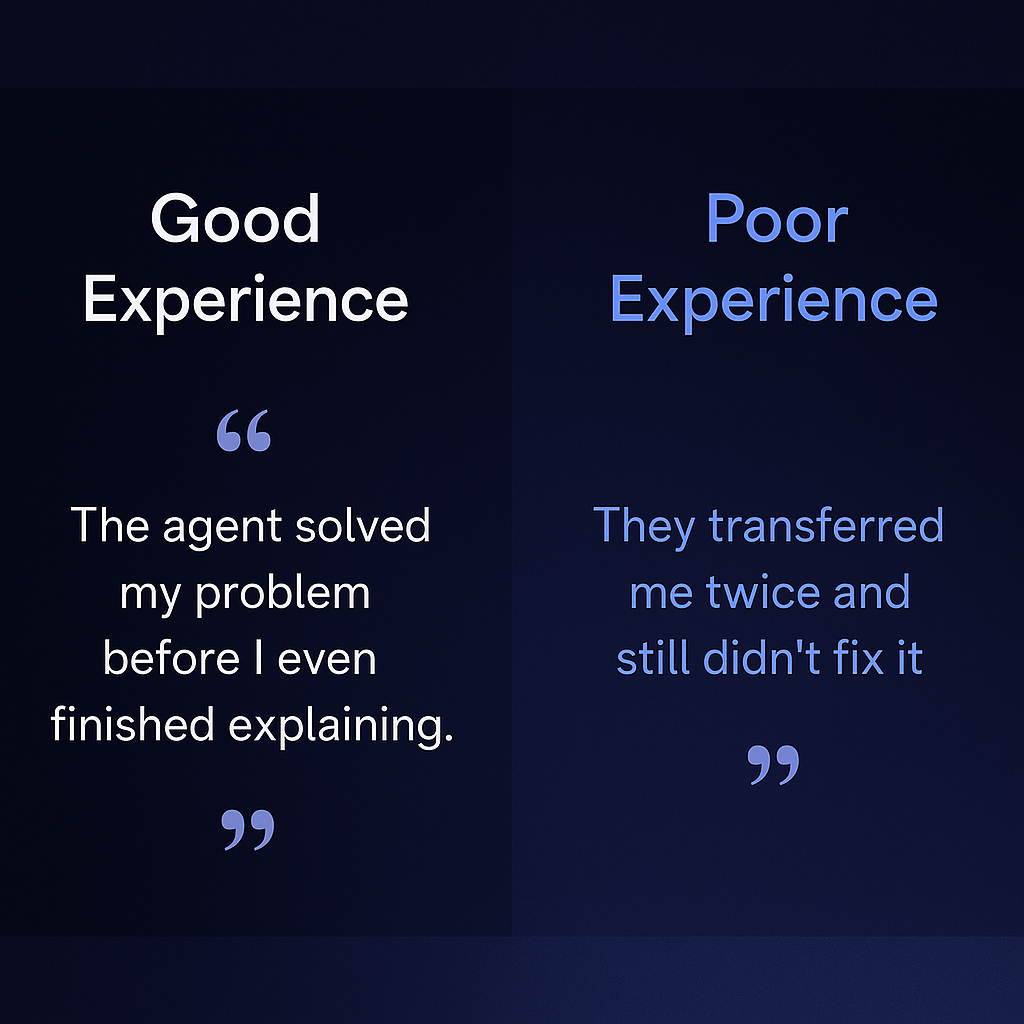
No matter how sharp your script or polished your brand promise, a customer’s experience ultimately depends on a single variable: the agent on the other end of the line.
When your training isn’t measured, you lose visibility into how well individual agents are prepared to deliver that experience. One agent nails it — fast, empathetic, on-brand. The next? Fumbles the issue, asks the wrong questions, or escalates needlessly.
The result is an inconsistent customer journey that undermines trust, loyalty, and brand equity — and it’s entirely avoidable.
The Real-World Risk
Inconsistency isn’t just inconvenient — it’s expensive. Research from PwC shows that 32% of customers will walk away from a brand they love after just one bad experience [source].
In a high-volume contact center, that margin for error vanishes quickly — and so do your retention goals.
The Role of Measurement
A modern call center training platform can do more than deliver content. It should:
- Track proficiency by call type and scenario
- Flag agents who struggle with specific customer intents
- Identify inconsistencies across teams, sites, or BPO partners
- Link learning outcomes directly to post-call QA and CSAT metrics
This is where measurement turns reactive coaching into proactive precision. It allows leaders to reinforce behaviors that align with CX standards — and intervene before small problems turn into reputation risks.
Make It Tangible
Picture this:
- Without measurement: One customer gets a confident agent who resolves their billing issue in 3 minutes. The next gets transferred twice and placed on hold for 15.
- With measurement: Training data highlights that 40% of agents misroute billing calls. A quick content update and targeted coaching closes the gap within days.
That’s not just good training. That’s operational agility.
It’s easy to spot top performers. It’s also easy to spot total breakdowns.
But the real threat to performance? The agents quietly drifting in the middle — just competent enough to avoid red flags, but not consistent enough to hit your targets.
Without measurement, these gaps stay invisible.
When supervisors and QA teams don’t have clear, behavior-linked training data, they default to coaching based on instinct, not insight. That might work for one or two agents. At scale, it creates blind spots — and blind spots create drag.
The Cost of the Unseen
A few average-performing agents might seem like a low-risk issue — but multiplied across hundreds of calls a day, their inconsistency compounds:
- More repeat contacts
- Lower first-call resolution (FCR)
- Subtle dips in NPS and CSAT
- Higher escalation rates
- Burnout in QA and supervisor teams
And there’s hard evidence to back that up:
Teams that link training to call behavior see a 21% increase in first-call resolution, according to CXToday.
What a Call Center Training Platform Should Surface
A modern call center training platform does more than assign learning paths. It connects the dots between:
- Specific training content and real-world call behavior
- Agent performance trends over time
- Scenario-based competency vs. general completion metrics
- QA results mapped directly to training gaps
This makes it easy to pinpoint who needs help and what kind of help they need — before performance KPIs slip and support tickets spike.
From Reactive to Strategic
Instead of coaching reactively (“That call didn’t go well”), you shift to surgical interventions (“You’re underperforming on tech support calls — let’s revisit module 3B”).
That’s how elite CX teams operate — and how training leaders prove their value beyond the onboarding room.
4. Tenured Agents Become the (Unpaid) Help Desk
When training misses the mark, your most experienced agents pay the price.
Instead of focusing on their own queues, coaching new hires, or handling escalations, they spend their shifts answering ping after ping:
“Where do I find the policy?”
“How do I log a refund?”
“What do I say if the customer asks for a supervisor?”
At first, it feels like teamwork. But over time, it becomes a productivity sink — and a morale killer.
Why This Happens
In most contact centers, tenured agents are the informal knowledge base. When training is static or misaligned, new agents fall back on the people they trust — not the LMS. And without real-time visibility into what learners retained (or didn’t), leaders rarely realize the scope of the issue until it’s already dragging the team down.
The Cost You Didn’t Budget For
Here’s what you’re actually spending when senior agents are flooded with questions:
- Double-handling of basic calls
- Delayed resolution due to interrupted workflows
- Burnout and disengagement from your top performers
- Lost coaching opportunities, because tenured staff are stuck firefighting
It’s not just inefficient. It’s dangerous — because when your most capable people are distracted, your whole floor feels it.
How a Call Center Training Platform Solves This
The right call center training platform gives leaders the data to:
- Identify which new hires are repeatedly asking for help — and on what
- Link those help requests to specific training modules or missed concepts
- Push micro-coaching or refreshers in real time
- Reduce reliance on tribal knowledge by building trust in the system
This shift doesn’t just reduce noise — it empowers your veterans to do what they do best: lead, coach, and solve complex problems. Not copy-paste FAQ links in Slack.
What This Looks Like in Practice
Without measurement: Your top performer fields 20+ low-level questions a day, juggling their own calls in between.
With measurement: You spot a trend in refund-handling confusion post-training. You push a 5-minute refresher. Questions drop by 80% in three days.
5. Higher Early Attrition (And the Cost Is Brutal)
In many contact centers, attrition is treated like bad weather — expected, unpredictable, and mostly out of your control. But that’s a myth.
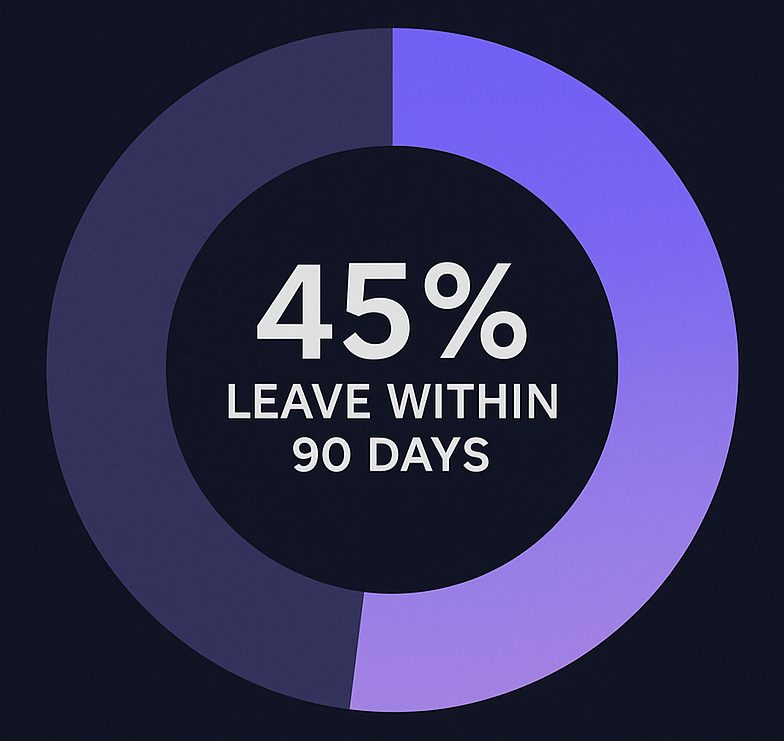
According to QATC, up to 45% of call center attrition happens in the first 60 to 90 days. And one of the top reasons agents leave early?
They feel overwhelmed, unsupported, or unprepared.
That’s not a hiring problem. That’s a training measurement problem.
Training Isn’t Support If It’s Not Measured
When training ends at “content delivered,” new agents hit the floor with false confidence — until the calls start. Then the cracks show. They hesitate. Fumble. Get flustered. Ask for help. Feel behind.
And eventually… they leave.
Without measurement, you can’t see which agents are struggling until they’ve already decided the job isn’t for them. By then, it’s too late — and the hiring treadmill starts again.
The Hidden Cost of Starting Over
Every early departure comes with a silent invoice:
- Wasted recruiting and onboarding spend (estimates range from $4,000 to $7,000 per hire [SHRM])
- Lost ramp time and floor coverage
- Stress on teams left behind
- Brand risk from undertrained interactions
When churn becomes predictable, but not measurable, you lose more than headcount — you lose momentum.
Where a Call Center Training Platform Makes the Difference
The right call center training platform helps prevent early exits by:
- Surfacing early warning signs (low post-training assessments, help requests, QA issues)
- Delivering refresher content before performance slips
- Providing supervisors with targeted insights for 1:1 coaching
- Giving agents feedback that builds confidence, not just compliance
In short, measurement turns guesswork into intervention — and training into a true retention tool.
How It Plays Out
Without measurement: Three new hires leave before week six. Nobody knows why. Everyone scrambles to cover shifts.
With measurement: You see early red flags in QA scoring tied to scenario gaps. You intervene with coaching. All three stay — and grow.
Bonus: Stale Content That Quietly Kills Progress
If you’re not measuring training effectiveness, you’re not improving it.
You’re just hitting “play” on the same old deck — even when the process changed last quarter.
What Goes Wrong:
- Policies evolve, but the slides don’t.
- Tools update, but the demos stay outdated.
- Agents get trained on yesterday’s workflows — and fail today’s calls.
What to Do Instead:
- Track performance by module — not just completion.
- Flag content that correlates with repeat errors or low QA scores.
- Automate feedback loops from the floor to the curriculum.
The best call center training platforms treat content like software:
Constantly versioned. Continuously improved.
TLDR: If You’re Not Measuring, You’re Paying for It Anyway
Most training teams don’t fail because of bad content.
They fail because they can’t prove what’s working — or fix what isn’t.
The result?
Slower ramp times. Inconsistent CX. Buried performance gaps. Burnout. Attrition. Stale content.
Each one comes with a cost — in dollars, morale, and customer trust.
But it doesn’t have to be this way.
A modern call center training platform gives you the visibility to move from reactive to precise, from effort-based to outcome-driven.
You stop guessing. You start improving.
And your training becomes a real driver of operational performance — not just a checkbox.
Frequently Asked Questions
What are the biggest hidden costs of not measuring training effectiveness in a call center?
How does a call center training platform help reduce agent ramp time and early attrition?
Why does unmeasured training lead to inconsistent customer experiences?
Want more insights like this?
Subscribe to TrueCX's newsletter—the #1 resource for contact center trainers—for the latest in AI-powered training, team performance strategies, and real-world tips for building a stronger, smarter contact center, starting with call center training platforms.